What Sets an Experienced Bicycle Accident Lawyer Apart
@sethpqns582
October 19, 2026 · 15 min read
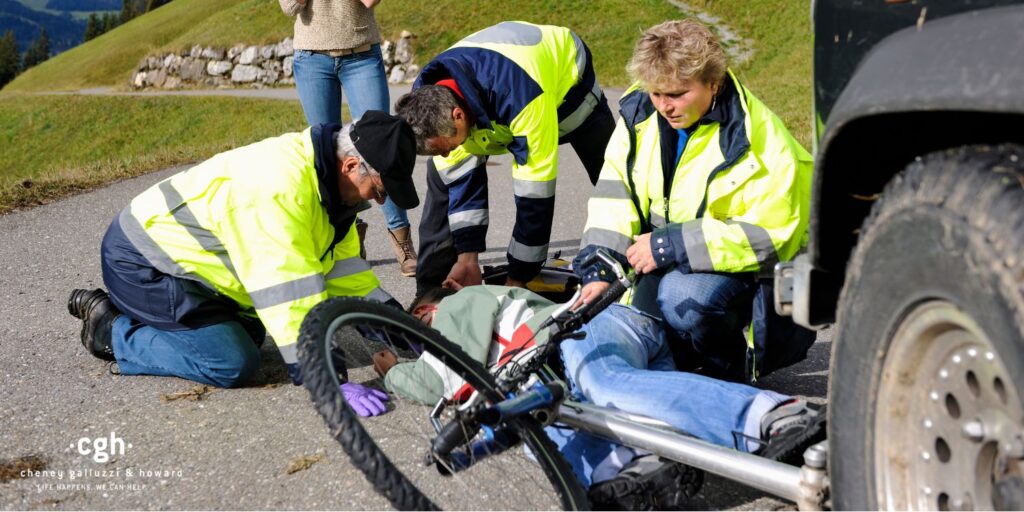
A bicycle crash can look simple from a distance. A rider goes down, a car is involved, an ambulance arrives, and the insurance process begins. In practice, these cases are rarely simple. The injuries are often severe, the facts are contested within hours, and the rider starts the claims process at a disadvantage. There is no steel frame around a bicycle, no airbag, and no meaningful margin for error. A low speed impact that would leave a driver annoyed can leave a cyclist with a fractured collarbone, a traumatic brain injury, or months away from work.
That gap between how a case looks and what it actually requires is where experience matters most. Not every personal injury lawyer is equally equipped to handle a bicycle collision. A seasoned Bicycle Accident Lawyer brings a very specific kind of judgment to the case, one shaped by recurring patterns, local road realities, insurance tactics, and the medical and practical consequences unique to cycling injuries.
The difference is not just legal knowledge. It is the ability to see the whole picture early, preserve evidence before it disappears, understand cyclist behavior without bias, and build a claim that reflects what the injured person has truly lost.
Bicycle cases turn on details other lawyers may miss
In many motor vehicle claims, liability is established through familiar tools: police reports, vehicle damage, eyewitnesses, and insurer statements. Bicycle claims use those same tools, but the margin for error is much tighter. A small factual dispute can affect the entire value of the case.
Take a common example: a driver turns right across a bike lane or shoulder area and clips the cyclist. To someone unfamiliar with cycling cases, it may seem like a standard failure-to-yield claim. An experienced lawyer sees more. They want to know the exact lane configuration, whether the rider was traveling predictably, how visible the cyclist was against the background conditions, whether the turn signal was activated, whether there was a painted bike lane or merely a shared road, and whether the driver claimed not to see the rider because of an A-pillar blind spot or a parked car.
Those are not minor details. They can decide whether liability is clear, disputed, or unfairly shifted onto the cyclist.
Cyclists also face persistent assumptions that can seep into every stage of a claim. Some adjusters still view riders as risk takers by default. Some defense lawyers subtly suggest that a person who chose a road bike in traffic accepted a higher level of danger. That framing matters because it can lower offers and harden settlement positions. A lawyer who has handled many bicycle cases knows how to dismantle those assumptions with facts, scene evidence, and a realistic explanation of safe riding practices.
Experience starts with the first 72 hours
A truly experienced Bicycle Accident Lawyer often does their best work before a lawsuit is ever filed. The first few days after a crash can shape the entire case. Surveillance footage is overwritten. Driver stories evolve. Witnesses become hard to find. A damaged helmet or bent wheel can say more than a page of competing statements, but only if someone recognizes its importance and preserves it.
This early work is where the difference between general familiarity and real experience becomes obvious. An experienced lawyer will usually move quickly to secure the scene evidence, request traffic camera footage if it exists, identify nearby businesses with surveillance systems, and obtain the rider’s medical records in a way that shows the progression of injury rather than a stack of disconnected documents.
They also know what not to do. There are cases where pushing too hard, too early, can lock a client into a theory that later evidence does not support. Good lawyers do not chase speed for its own sake. They move fast on evidence preservation and deliberate on strategy.
I have seen bicycle cases weaken simply because no one photographed the road surface within a day or two. A pothole gets patched. Faded lane markings get repainted. Construction cones move. A driver’s vehicle gets repaired before its right-side mirror, windshield damage, or side-panel scrape can be documented. Once those things are gone, a case often depends on memory, and memory is the least reliable witness in the room.
They understand the mechanics of a bicycle crash
Lawyers do not need to be bike mechanics, but they do need to understand how bicycle crashes happen. That includes body position, braking distance, line of travel, visibility, road hazards, and common rider reactions under stress.
For instance, many serious injuries occur when the bicycle itself is not struck with great force, but the rider is thrown in a secondary fall. A front wheel deflects, the rider goes over the bars, and the most significant injuries come from the impact with pavement. To an insurance company looking only at vehicle damage, the collision may appear minor. To a lawyer who understands cycling dynamics, the injury pattern makes sense.
A lawyer with real experience also knows the significance of equipment. Helmet damage can support the force and angle of impact. Pedal systems can explain why a rider did not get a foot down in time. Light placement matters in low-visibility cases. Tire marks, frame damage, and broken components can help reconstruct direction, speed, and point of contact. Even cycling clothing can become relevant if the defense raises visibility issues.
This knowledge matters because insurers often argue from the physical damage backward. If the car shows a small dent, they infer a low-impact event. If the bike frame is not snapped in half, they imply exaggeration. That is poor reasoning in bicycle cases, and an experienced attorney knows how to challenge it with both common sense and qualified expert input when needed.
Medical judgment is as important as legal judgment
Bicycle injuries often resist neat timelines. A broken wrist is obvious. A concussion is not always obvious. Neither is cervical strain, shoulder instability, nerve irritation, or hip pain that worsens after the adrenaline fades. Riders are also notorious for underreporting symptoms in the first day or two. Some want to get home. Some are embarrassed. Some believe they are lucky to have survived and minimize what they feel.
A lawyer who regularly handles bicycle accidents knows this pattern. They encourage prompt, appropriate medical evaluation, not because it inflates a case, but because untreated injuries become harder to diagnose and harder to prove. A cyclist who waits ten days to seek care for dizziness and headaches may still have a legitimate concussion, but the delay gives the insurer an opening. An experienced lawyer sees that problem coming.
They also understand recovery in practical terms. A hand injury does not only affect work. It affects braking confidence, steering, carrying groceries, opening doors, typing, and sleep. A shoulder injury for a cyclist can be especially disruptive because even basic riding posture loads the upper body. A pelvic or knee injury may alter gait, reduce power, and end a commuter’s most reliable form of transportation.
That practical understanding shapes case value. Good lawyers do not reduce injuries to diagnostic codes. They connect medical facts to the client’s daily life with specificity.
They know how comparative fault gets used against cyclists
One of the most contested parts of a bicycle injury case is fault allocation. Even where a driver plainly made a mistake, insurers often search for reasons to assign some blame to the cyclist. Sometimes the argument is legitimate. Sometimes it is thin. Either way, it has to be answered carefully.
Common accusations recur across many cases. The rider was “hard to see.” The rider “came out of nowhere.” The rider “was not in the proper lane.” The rider “should have been more defensive.” In some cases, the defense points to dark clothing, a missing rear light, a lane split around parked cars, rolling through a stop sign, or riding slightly outside a designated bike lane.
An experienced Bicycle Accident Lawyer knows that these issues do not have one-size-fits-all answers. Local traffic laws matter. Road design matters. The rider’s route choices matter. So does context. A cyclist may lawfully leave a bike lane to avoid debris, a turning vehicle, a door zone, or a blocked path. A rider may be visible enough under the law even if the driver says they did not notice them. “I didn’t see the cyclist” is not a defense when a reasonably attentive driver should have seen them.
What sets the stronger lawyer apart is not bluster. It is precision. They do not respond to comparative fault with general statements about cycling rights. They respond with scene analysis, timing, roadway geometry, statements, and where appropriate, expert reconstruction. They know when to concede a weak point and when to fight a false one. That credibility matters in negotiation and, if needed, in front of a jury.
Insurance companies read bicycle claims differently
Many injured riders expect the process to resemble an ordinary car crash claim. It often does not. Insurers tend to approach bicycle claims with a mix of skepticism and cost control. Severe injuries may be obvious, but property damage can appear modest compared with a multi-vehicle collision. That mismatch can distort the insurer’s view of the case.
A seasoned lawyer knows how claims departments evaluate risk. They know that adjusters look for treatment gaps, prior injuries, social media posts showing activity, and inconsistencies between emergency records and later complaints. They also know when the insurer is simply testing whether the claimant has representation capable of trying the case.
That last point is underappreciated. Settlement value is influenced not only by facts and injury severity, but by whether the defense believes the lawyer can develop the case fully and present it effectively if negotiations fail. Experienced bicycle accident attorneys tend to command more serious attention because insurers know those lawyers are less likely to miss evidentiary opportunities and less likely to fold under routine pressure.
That does not mean every case should go to trial. Most should not. It does mean the best settlements often come from lawyers who prepare as if trial remains possible.
A strong lawyer can translate cycling culture for non-cyclists
Judges, jurors, adjusters, and even some physicians may not understand why cyclists ride where they do, how they manage traffic, or why certain road conditions are genuinely dangerous. Without context, ordinary cycling decisions can be miscast as careless.
For example, many non-riders do not appreciate the danger of the door zone next to parked cars, the instability caused by metal grates or rail tracks, or the reason a rider may “take the lane” on a narrow road to avoid being squeezed by passing traffic. They may not know that a cyclist descending at speed can still be operating prudently, or that a painted bike lane full of debris is not a safe place to remain simply because it exists.
An experienced lawyer acts as a translator without sounding defensive. They explain rider behavior in plain language. They make it understandable to people who have never clipped into pedals, merged around a bus, or scanned for a driver about to open a door.
This is one area where lived familiarity can help. Lawyers who represent cyclists regularly tend to know the difference between aggressive riding and standard urban riding. They can distinguish bad choices from necessary ones. That perspective often changes how a case is framed from the very beginning.
They build damages beyond the emergency room bill
A bicycle injury claim is not only about hospital charges and physical therapy receipts. Those are important, but they are often the smallest part of the story. The larger question is how the crash changed the client’s body, work, mobility, routines, and confidence.
An experienced Bicycle Accident Lawyer will usually develop damages in layers. First comes the direct medical picture. Then the practical consequences. Then the longer horizon: future care, reduced earning capacity, chronic pain, reduced athletic function, and the emotional impact of losing independence or a valued part of life.
Consider a 42-year-old rider who commutes by bike four days a week and races in local events on weekends. A shoulder injury that leaves them with reduced range of motion may not produce a dramatic MRI finding after months of treatment. Yet the injury could still end racing, complicate child care, make office work painful, and force a switch to driving or rideshare costs. Those losses are real. They need to be documented carefully, not assumed.
The same is true for the bicycle itself. High-end bicycles, wheelsets, power meters, helmets, computers, and custom fitting expenses can add up quickly. Many people outside cycling do not realize that a serious road or triathlon setup can cost as much as a used car. A lawyer with experience in these cases does not dismiss property loss as an afterthought.
The best ones know when experts help and when they do not
Not every bicycle accident requires an accident reconstructionist, biomechanical engineer, vocational expert, or life care planner. Bringing in experts reflexively can drive up costs and complicate a case. Failing to use them when they are necessary can leave value on the table or weaken proof at trial.
That balance is a mark of experience.
A disputed left cross collision at an intersection with conflicting witness statements may justify reconstruction. A straightforward rear-end impact with severe orthopedic injuries may not. A self-employed contractor with ongoing cognitive symptoms after a head injury may need a stronger future-loss analysis than a plaintiff who made a full return to work in six weeks. These are judgment calls. They cannot be reduced to a formula.
One useful way to evaluate the lawyer is to listen to how they explain this. Lawyers with depth tend to describe trade-offs clearly. They can tell a client why an expert might matter, what the expert would likely add, and whether that expense is proportionate to the dispute.
Case handling says a lot about experience
A lawyer’s skill is not only visible in courtroom performance. It is visible in process. Bicycle injury clients are often dealing with pain, transportation problems, work disruptions, and anxiety about medical bills. Sloppy case handling makes all of that worse.
Experienced lawyers usually have systems that fit the realities of these cases. They know to ask for photos of the bicycle from multiple angles before repairs happen. They ask about helmet retention, wearable data, cycling apps, and GPS routes. They preserve receipts for replacement gear. They obtain complete imaging, not just summary notes. They monitor whether clients are improving or plateauing. They know when a case is ripe for negotiation and when https://www.google.com/maps?cid=12754349830689844018 waiting for medical clarity is the wiser move.
The practical signs are often easy to notice early. A good lawyer asks specific questions. They do not speak about bicycle accidents as if they were interchangeable with fender benders. They care about the roadway, the bike, the protective gear, the route, the injuries, and the client’s normal riding pattern. They are trying to understand the event, not just open a file.
Questions worth asking before hiring a lawyer
If someone is choosing counsel after a cycling collision, it helps to ask direct questions. The answers usually reveal whether the lawyer has genuine experience or only broad personal injury experience.
- How many bicycle accident cases have you handled, and what kinds of crashes were they?
- Have you taken any of these cases to trial or arbitration when liability was disputed?
- What evidence would you try to preserve in the first week?
- How do you evaluate comparative fault arguments against cyclists?
- Who would work on my case day to day?
The point is not to demand a perfect script. It is to see whether the lawyer speaks concretely. Vague confidence is cheap. Specificity is harder to fake.
The human side matters more than people expect
There is one final quality that often separates the strongest attorneys from the merely competent: they understand that cyclists are not just injury claimants. They are often people whose routines, identity, and autonomy have been shaken.
For a dedicated rider, losing the ability to bike can be more than an inconvenience. It can mean losing a commute that offered reliability and peace, a sport that provided structure, a social outlet, or a sense of physical competence. Many clients also carry a new fear after the crash, especially if they were hit in a way that felt random and unavoidable. Returning to the road can be psychologically hard even after the bones heal.
A lawyer does not need to dramatize that loss, but they should recognize it. The best advocacy is factual and humane at the same time. It makes room for pain without exaggeration. It gives insurers, judges, and juries a full picture of what the event cost.
That is what sets an experienced Bicycle Accident Lawyer apart. Not a louder advertisement, not a bigger promise, but a sharper eye for evidence, a better grasp of cycling realities, stronger judgment about liability and damages, and the ability to tell the client’s story with credibility. In bicycle cases, those differences are not cosmetic. They often define the result.
CGH Injury Lawyers
2701 Lawrence St Suite 201
Denver, CO 80205, United States
Phone: +1 720-669-8062
FAQ About Bicycle Accident Lawyer
Who is at fault if a car hits a bicycle?
Fault depends on the evidence and the traffic rules that applied to the collision. A driver, cyclist, or another party may share responsibility. Police reports, witness accounts, video, and the physical evidence can help establish what happened. A collision with a car does not automatically determine legal fault.
Can you sue someone for hitting you on a bike?
You may have a claim when another person's negligent conduct causes your injuries and losses. The available evidence, applicable deadlines, insurance coverage, and any shared fault affect your options. A lawyer can review the circumstances and explain whether an insurance claim or lawsuit is appropriate; compensation is not guaranteed.
What percentage does an injury lawyer usually take?
There is no single percentage that applies to every injury case. Many lawyers use a contingency fee based on a share of the recovery, with the terms stated in a written agreement. Ask how the percentage is calculated, whether it changes during litigation, and how case expenses are handled before signing.